I had the chance to talk to Weld Royal for a recent profile at Barron’s:
We talked about my new book (it comes out in a month!), institutional investors, working with wealth management clients, managing risk and more.
We also got into some of my thoughts on how I got into creating content:
You wrote about getting started at Ritholtz in 2015 by criticizing the industry. What was wrong then–and now? It just felt like everyone and everything was negative. People were coming up with reasons to not invest and to change their investment plans. A lot has actually improved, because I think one of the big things was that people were making decisions that weren’t really tied to their goals. They were freaking out about what happened in the markets with the crashes and the recessions. A lot of wealth management has changed and gone toward a goals-based idea of investing money. That’s one of the positives that we’ve seen.
What still needs to change? One of the things that wealth management is working on is just trying to make financial advice available to more people and more groups, and to get more people invested.
When I first started writing I had my friends and family in mind as the audience. My goal was to help explain the complexities of investing, personal finance and the financial markets in plain English.
No one read this blog for the first six months or so beyond my friends and family (and even they were probably just humoring me).
But I kept at it.
Then I started getting emails from financial advisors asking if they could send my blog posts to their clients. This was a surprise at first but they explained to me that their clients were also just normal people, not in the finance industry, who could benefit from more simplicity.
I’m not always successful but my goal here after more than 10 years of writing remains the same.
The world seems to be getting more complex by the day so it’s important to help filter out the noise and focus on what’s important.
I’ve always been a big fan of using visuals as a way to provide context when it comes to the markets. My new book has dozens and dozens of charts, tables and graphs to get my point across.
This is why I loved Chart Kid Matt’s idea for Exhibit A when he presented it to us. He wanted to help financial advisors use visuals as a tool for client communication.
The feedback for the product has been great but many advisors said they wanted more to go along with the visuals. So on a monthly basis Matt and I are are putting together a custom update.
He puts together a collection of charts and I do a write-up to help explain what they mean for clients with some context and perspective.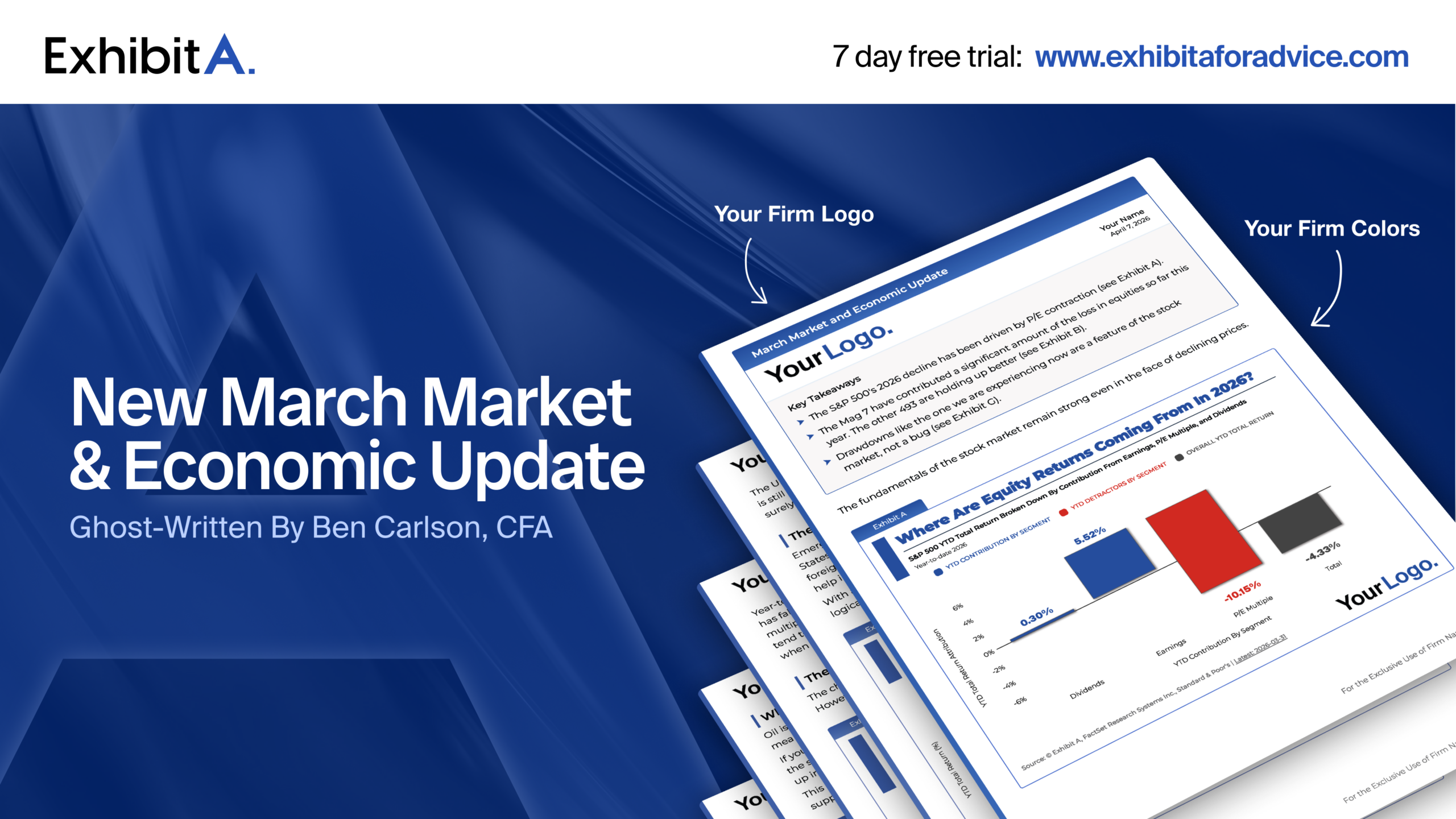
I’m essentially ghostwriting updates for advisors, which is what many people have asked me for over the years.
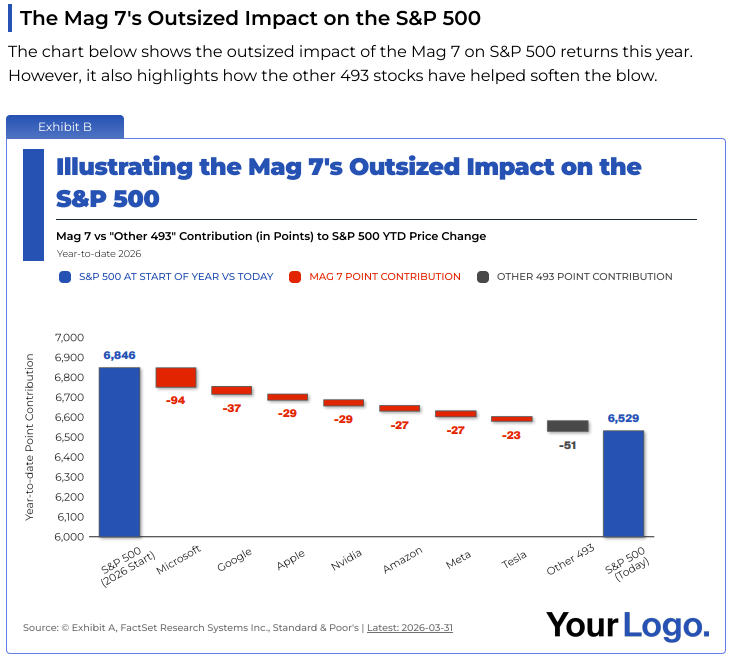
Here are some examples of the charts we sent out in the latest edition:
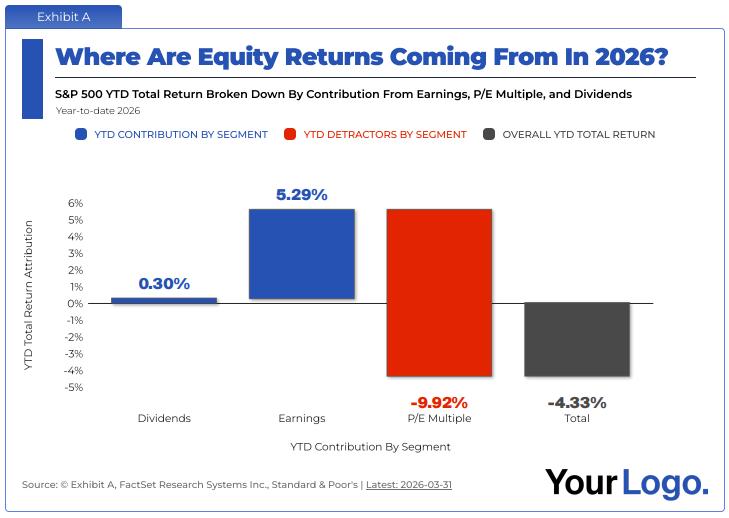
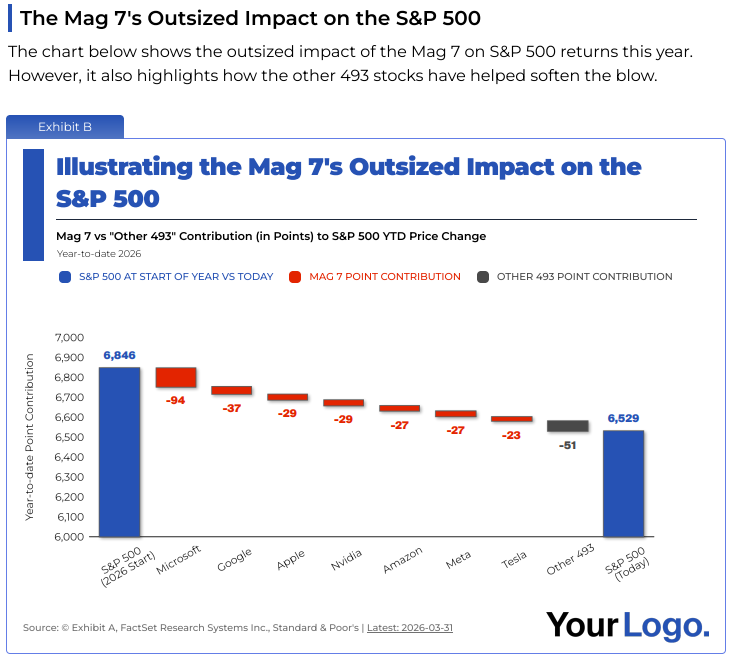
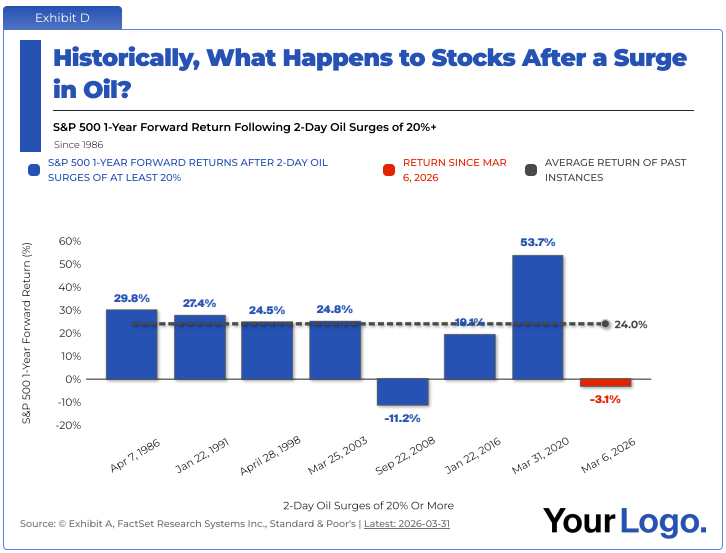
We’re going to do six to eight charts every month. Each one then has its own write-up. The report comes in a PDF that can be customized with your firm’s colors and logos. It looks really slick.
These updates are only available for advisors who sign up for Exhibit A.
You can sign up here and try it out with a free trial.
Further Reading:
The 20% Rule
This content, which contains security-related opinions and/or information, is provided for informational purposes only and should not be relied upon in any manner as professional advice, or an endorsement of any practices, products or services. There can be no guarantees or assurances that the views expressed here will be applicable for any particular facts or circumstances, and should not be relied upon in any manner. You should consult your own advisers as to legal, business, tax, and other related matters concerning any investment.
The commentary in this “post” (including any related blog, podcasts, videos, and social media) reflects the personal opinions, viewpoints, and analyses of the Ritholtz Wealth Management employees providing such comments, and should not be regarded the views of Ritholtz Wealth Management LLC. or its respective affiliates or as a description of advisory services provided by Ritholtz Wealth Management or performance returns of any Ritholtz Wealth Management Investments client.
References to any securities or digital assets, or performance data, are for illustrative purposes only and do not constitute an investment recommendation or offer to provide investment advisory services. Charts and graphs provided within are for informational purposes solely and should not be relied upon when making any investment decision. Past performance is not indicative of future results. The content speaks only as of the date indicated. Any projections, estimates, forecasts, targets, prospects, and/or opinions expressed in these materials are subject to change without notice and may differ or be contrary to opinions expressed by others.
The Compound Media, Inc., an affiliate of Ritholtz Wealth Management, receives payment from various entities for advertisements in affiliated podcasts, blogs and emails. Inclusion of such advertisements does not constitute or imply endorsement, sponsorship or recommendation thereof, or any affiliation therewith, by the Content Creator or by Ritholtz Wealth Management or any of its employees. Investments in securities involve the risk of loss. For additional advertisement disclaimers see here: https://www.ritholtzwealth.com/advertising-disclaimers
Please see disclosures here.