My end-of-week morning train WFH reads:
• AI Isn’t Coming for Everyone’s Job: The Atlantic on the limits of artificial intelligence — the things AI does brilliantly and the vast terrain of human work it can’t touch. The rise and fall of the player piano indicates a robust demand for human labor that machines cannot replace. (The Atlantic)
• How Homeowners Are Turning to Adjustable-Rate Mortgages, in Charts: The prospect of short-term savings is pushing more buyers to adjustable-rate mortgages. (Wall Street Journal) see also How elevator rules are throwing a wrench into America’s housing market: The unintended consequences of a 1988 law are making housing less accessible and driving up prices. Disability-access elevator requirements are adding enormous cost to mid-rise construction, making affordable housing harder to build. (Washington Post)
• What the Push for Alts in Retail Channels Means for Institutional Investors: Limited partners have questions about their managers’ quest for new sources of capital. (Chief Investment Officer)
• The return-to-the-office trend backfires: Across practitioner reports and peer-reviewed research, organizations that commit to highly flexible models, including remote-first, report strong output, healthier engagement, and faster growth than mandate-driven peers. (The Hill)
• Why ATMs didn’t kill bank teller jobs, but the iPhone did: The classic automation parable gets a second act — and the real job killer wasn’t the machine you’d expect. There’s a lot more to replacing labor than just automating tasks. (David Oks) see also Silicon Valley’s New Obsession: Watching Bots Do Their Grunt Work: Tech workers are mesmerized by watching AI agents click through spreadsheets and fill out forms on their behalf; they compare notes on how long their fleet of virtual interns can labor away without making a mistake (Wall Street Journal)
• Microsoft Takes a Stand Against the Trump Administration: The technology giant’s siding with Anthropic in its fight against the Pentagon stands out in an era when big companies have tended to keep quiet. As the tech giant pushes back on Pentagon demands, Anthropic is caught in the middle. (DealBook)
• How a Die-Hard Libertarian Is Negotiating Lower Health-Care Costs: An Oklahoma anesthesiologist has spent decades posting transparent prices at his surgery center. Others are now following his lead. (Businessweek)
• The right way to be a scientific contrarian: Being a skeptic is important. Being a crank is not. Here’s how to tell the difference. Not everyone accepts the scientific consensus; some even make careers out of challenging it. But only a select few do it the right way. (Big Think)
• YouTube Just Ate TV. It’s Only Getting Started. YouTube has surpassed traditional television in viewership across sports, late night, and comedy — and the gap is widening fast.(Hollywood Reporter)
• What Brad Pitt in ‘F1’ and Michael B. Jordan in ‘Sinners’ Can Teach Men About Style: This year’s Oscar-nominated movies are a menswear feast. Stylists and costume designers offer five takeaways. Hollywood’s latest leading men are offering a masterclass in how to dress like a grown-up. (Wall Street Journal)
Be sure to check out our Masters in Business interview this weekend with Matt Cherwin, co-founder and Chief Investment Officer of Marek Capital. The alternative asset management firm launched in 2024. Previously, he spent 16-years at JPMorgan Chase & Co where he held titles of Chief Investment Officer, Group Treasurer, Co-Head of Global Spread Markets, Global Head of Securitized Products, and Global Head of Asset-Backed Trading.
We assume human cognitive labor is scarce and predictably compensated. AI, however, undoes this scarcity.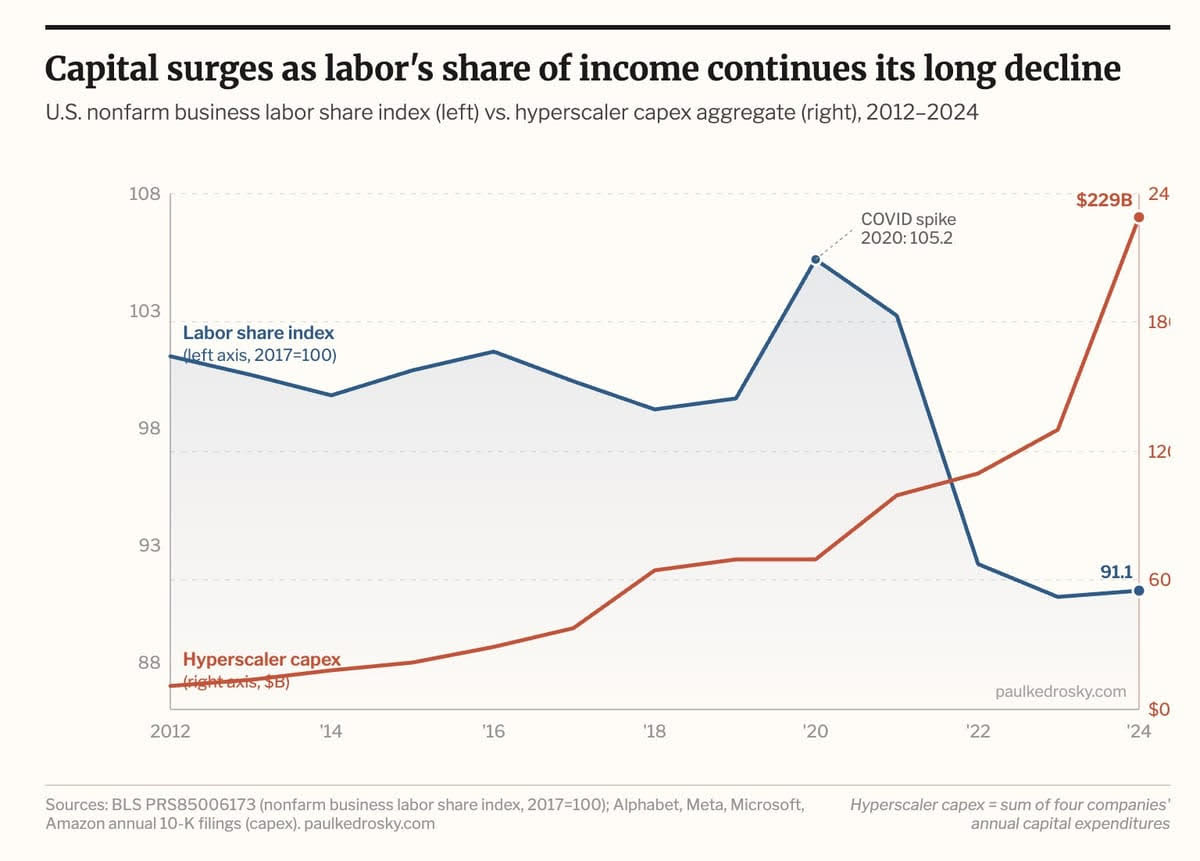
Source: Paul Kedrosky
Sign up for our reads-only mailing list here.