Max Planck was born in Germany in the 1850s.
At a relatively young age, Planck became interested in thermodynamics and radiation, earning his doctorate at 21. His work was essential to the field of physics and what came to be known as quantum theory. Planck’s constant became the foundation for quantum mechanics.
This work earned Planck the Nobel Prize in Physics in 1918.
Charlie Munger spoke about Planck in a 2003 speech to the economics departments at the University of California, Santa Barbara.
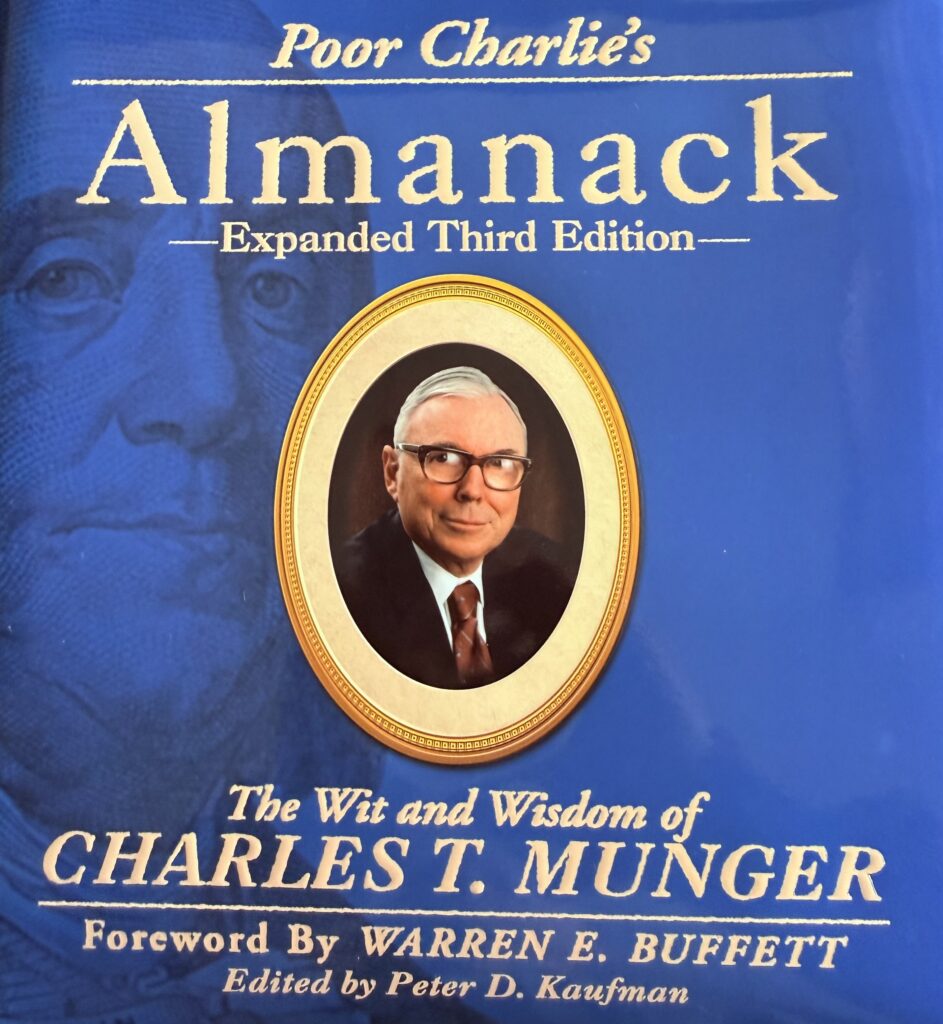
The talk is published in Poor Charlie’s Almanack.1 Munger tells a story about Planck to make a point about the different kinds of intelligence:
After he won his prize, he was invited to lecture everywhere, and he had this chauffeur who drove him around to give public lectures all through Germany. And the chauffeur memorized the lecture, and so one day he said, “Gee, Professor Planck, why don’t you let me try it by switching places?”
And so he goes up and gave the lecture. At the end of it, some physicist stood up and posed a question of extreme difficulty. But the chauffeur was up to it.
“Well,” he said, “I’m surprised that a citizen of an advanced city like Munich is asking so elementary a question, so I’m going to ask my chauffeur to respond.”
Planck is one of the smartest people who ever lived. He actually tried economics as a discipline but later gave up. Why?
He admitted, “It’s too hard. The best solution you can get is messy and uncertain.” There wasn’t enough order for him.

The story about the chauffeur is likely apocryphal but the message is more important than ever these days.
Information is a commodity in a world of AI and LLMs. Answers are ubiquitous.
You can outsource your knowledge. You can outsource your writing. You can outsource tasks at work. You can outsource your email responses. AI will essentially allow you to outsource your thinking if you want to.
But you can’t outsource your understanding.
I’ve been thinking a lot about the intersection of AI and the wealth management space. I’ve been going around giving talks about the topic to financial advisors and wealth managers. Lots of people are worried about the impact of AI on the advisory business.
The advisor AI tools I’ve seen are amazing. AI is absolutely going to make life easier for the advisors who know how to use it correctly.
But the biggest change going forward will be a more informed client. You can ask an LLM as many questions as you want and it will never tire of those inquiries. Will all of the answers be high quality? Not necessarily but good enough in most cases.
Information and surface level answers are table stakes. Consumers can look everything up. They can stress test your responses and financial planning techniques. They can upload portfolio statements and holdings for instant analysis and feedback.
This is why context, perspective and communication skills will be more important than ever going forward, in all domains.
Sure, you can provide some answers from AI but can you explain it in plain English? Can you make it more personal? Can you push back when necessary?
Are you informed enough to have an opinion on where the answers make sense and where they don’t?
Qualitative skills are the future now more than ever.
The ability to show empathy, be creative and have genuinely informed conversations with human beings is how you separate yourself from those who only use chauffeur knowledge.
Short cuts won’t help in a world where everyone has access to them.
Further Reading:
Stories vs. Statistics
1My father gave me an early copy of this book for Christmas when I first got into the industry. Later my friend Jeremy Schwartz was able to have Munger sign a copy for me. It’s easily one of my favorite books and something I re-read on occasion.
This content, which contains security-related opinions and/or information, is provided for informational purposes only and should not be relied upon in any manner as professional advice, or an endorsement of any practices, products or services. There can be no guarantees or assurances that the views expressed here will be applicable for any particular facts or circumstances, and should not be relied upon in any manner. You should consult your own advisers as to legal, business, tax, and other related matters concerning any investment.
The commentary in this “post” (including any related blog, podcasts, videos, and social media) reflects the personal opinions, viewpoints, and analyses of the Ritholtz Wealth Management employees providing such comments, and should not be regarded the views of Ritholtz Wealth Management LLC. or its respective affiliates or as a description of advisory services provided by Ritholtz Wealth Management or performance returns of any Ritholtz Wealth Management Investments client.
References to any securities or digital assets, or performance data, are for illustrative purposes only and do not constitute an investment recommendation or offer to provide investment advisory services. Charts and graphs provided within are for informational purposes solely and should not be relied upon when making any investment decision. Past performance is not indicative of future results. The content speaks only as of the date indicated. Any projections, estimates, forecasts, targets, prospects, and/or opinions expressed in these materials are subject to change without notice and may differ or be contrary to opinions expressed by others.
The Compound Media, Inc., an affiliate of Ritholtz Wealth Management, receives payment from various entities for advertisements in affiliated podcasts, blogs and emails. Inclusion of such advertisements does not constitute or imply endorsement, sponsorship or recommendation thereof, or any affiliation therewith, by the Content Creator or by Ritholtz Wealth Management or any of its employees. Investments in securities involve the risk of loss. For additional advertisement disclaimers see here: https://www.ritholtzwealth.com/advertising-disclaimers
Please see disclosures here.