Komplete Investments LLC
At Komplete Investments, capital management begins with understanding context. Markets change, objectives evolve, and risk is rarely static. Our role is to provide disciplined oversight that adapts to these realities while remaining anchored in long-term priorities. We focus on structure, informed decision-making, and continuity across market cycles so capital is managed with clarity rather than reaction.
We focus on clarity over complexity.
Capital decisions are guided by structure, risk alignment and long term objectives.

Every strategy is built with purpose, patience and measured exposure.

Capital management is not a one-time decision.

Portfolios require ongoing oversight, disciplined adjustments and alignment with changing economic conditions.
Market Perspective
Current markets reward patience more than prediction. Volatility, policy shifts, and global economic pressure have made short-term signals unreliable and reactive decision-making costly. In this environment, capital preservation and measured deployment depend less on timing and more on structure. Understanding how macro forces influence asset behavior over time allows portfolios to remain resilient even when conditions feel uncertain.
At Komplete Investments, market perspective is not built on headlines or forecasts. It is developed through continuous analysis of economic indicators, liquidity conditions, and structural trends that shape risk across cycles. This perspective informs how capital is positioned, adjusted, and protected, ensuring decisions remain grounded in context rather than noise.
Strategic Discipline
Long-term results are rarely the outcome of singular decisions. They are the result of consistent discipline applied across changing conditions. Strategic discipline means knowing when to act, when to wait, and when restraint is the most valuable decision available. It requires frameworks that guide behavior during both opportunity and disruption.
Komplete Investments applies disciplined oversight to ensure capital strategies remain aligned with defined objectives as circumstances evolve. This includes regular evaluation of exposure, thoughtful adjustments when warranted, and continuity in decision-making across market cycles. The goal is not to react faster than the market, but to act with clarity and intention when it matters most.
Komplete Investments Corporate Updates
K.I. approaches growth as a deliberate, structured process — guided by long-term objectives rather than short-term momentum. Each initiative considered by the firm is evaluated through the lens of capital stewardship, operational viability, and strategic alignment. Rather than signaling intent through projections or commentary, K.I. prioritizes action supported by governance, due diligence, and sustained oversight. This approach ensures that expansion reflects readiness and discipline, not acceleration for its own sake.
The updates below highlight recent milestones and active initiatives that demonstrate this philosophy in practice. From governance and information infrastructure to strategic partnerships and sector engagement, these developments reflect measured progress across multiple fronts. Together, they offer insight into how K.I. continues to build responsibly — pairing forward-looking strategy with tangible execution.

Advisory Board
The completion of our advisory board marks a foundational milestone in the firm’s long-term growth strategy. This board was assembled with intention — prioritizing experience, regulatory understanding, and sector depth over visibility or volume. Each advisor contributes specialized expertise across finance, operations, governance, and market analysis, ensuring that decision-making is informed by multiple perspectives and grounded in real-world execution. Rather than serving as a symbolic layer, the advisory board is actively integrated into strategic review, risk assessment, and forward planning initiatives.
This structure allows the firm to remain agile while maintaining institutional discipline. As market conditions evolve and new opportunities emerge, advisory oversight provides a stabilizing framework for evaluation and alignment. The result is a governance model that supports thoughtful expansion, protects capital interests, and reinforces accountability at every level of operation. For clients and partners, this milestone reflects a commitment to measured leadership and sustained excellence — not growth for growth’s sake, but progress guided by experience.

MTD Acqusition
The acquisition of MTD represents a strategic investment in information access, market awareness, and editorial independence. In an environment where financial narratives often prioritize immediacy over accuracy, ownership of a dedicated finance news platform enables a more controlled and thoughtful approach to market intelligence. MTD operates as an independent media property, focused on delivering timely financial coverage, economic insights, and industry analysis without external influence or promotional bias.
Beyond content distribution, the acquisition strengthens internal research capabilities and enhances visibility into emerging financial trends. By maintaining a direct relationship with financial reporting and analysis, the firm deepens its understanding of market sentiment, policy shifts, and economic signals that influence investment decision-making. This alignment between media intelligence and capital strategy reinforces the firm’s emphasis on informed, data-driven oversight — ensuring that investment perspectives remain current, contextual, and strategically grounded.

Transportation Sector Engagement
K.I. is currently engaged in extended discussions with a transportation-focused company as part of a broader evaluation of essential service infrastructure opportunities. These conversations are exploratory in nature and centered on understanding operational frameworks, regulatory environments, and long-term demand stability within the transportation sector. Rather than approaching the space from a speculative or rapid-entry standpoint, K.I. is prioritizing alignment, scalability, and governance considerations before advancing any formal commitments.
Transportation remains a foundational component of economic activity, intersecting with urban development, workforce mobility, and commercial logistics. By maintaining active dialogue with established operators, K.I. continues to assess how capital, oversight, and strategic structure can contribute to sustainable growth in this sector. Any future involvement will be guided by disciplined analysis and measured deployment, ensuring that participation supports long-term objectives and adheres to the firm’s standards for operational readiness and capital stewardship.
Client Value & Approach
Engagement with K.I. begins with an understanding of objectives, constraints, and strategic priorities. Each relationship is evaluated individually to ensure alignment, suitability, and long-term viability. Initial inquiries allow for a focused review of needs and determine whether collaboration is appropriate.
- Capital allocation strategy
- Risk alignment and exposure management
- Portfolio structure and oversight
- Long-term growth planning
- Preservation and continuity considerations
- Market and economic assessment
- High-net-worth individuals
- Private entities and holding companies
- Family offices and generational wealth
- Entrepreneurs with liquidity events
- Clients seeking ongoing oversight
- Capital requiring structured management
Mercury offers secure online banking, money management and tools built specifically for founders, investors and growing companies. Open an account in minutes and simplify how your business handles capital, payments and growth.
Want to expand your message by purchasing ad space on Komplete Investments?
-
10 Friday AM Reads – The Big Picture
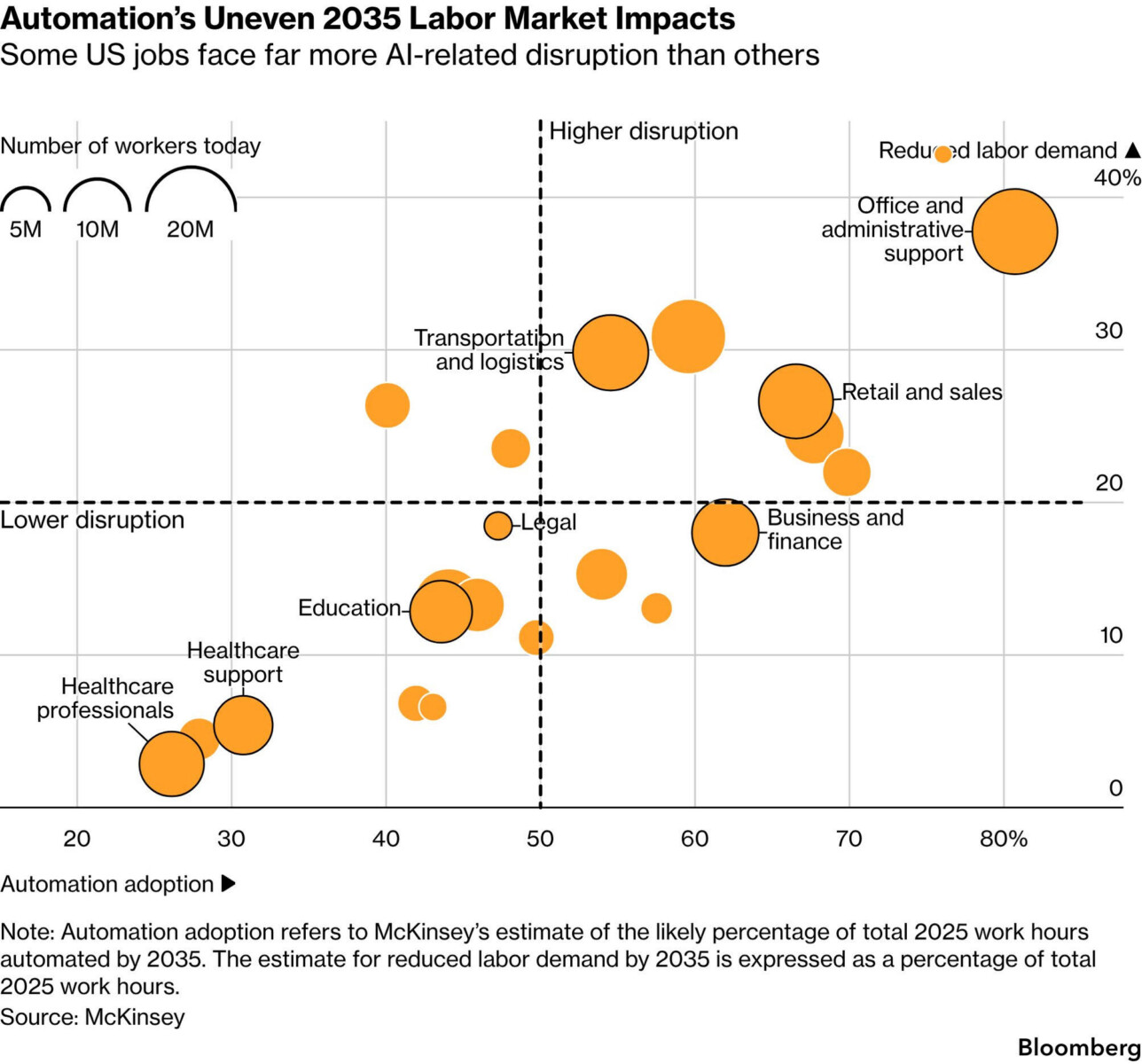
My end-of-week morning reads: • Power Bill Divide: Soaring prices at some of America’s Biggest Utilities are fueling new scrutiny of the investor-owned model. (Bloomberg) • What the Midterms Mean for Your Stock Portfolio: Midterm elections can move headlines. History says they shouldn’t move your portfolio. (Kiplinger) see also How governments spend money Charting the outline of civilisation: Toby Nangle compares how countries split their budgets between education, defence and everything else, now that government finances have moved to centre stage. (Financial Times) • The Fierce…
-
Animal Spirits: Are Higher Rates Worse Than ZIRP?
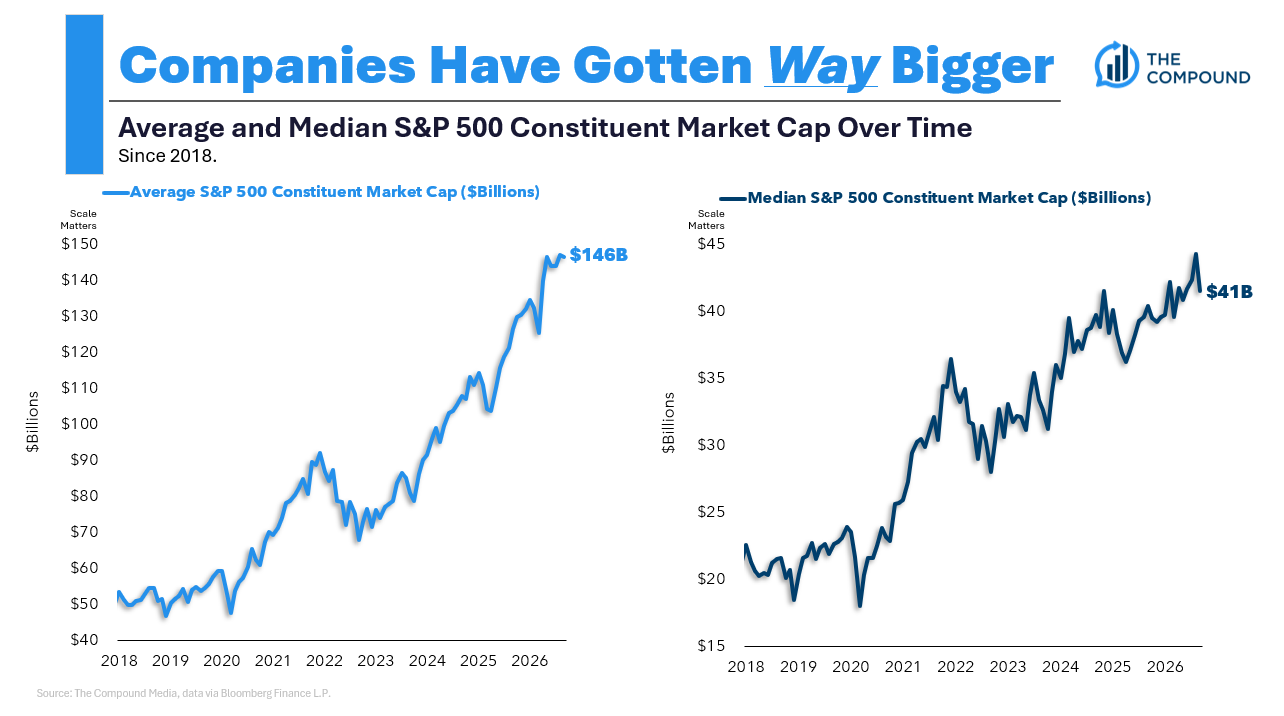
Today’s Animal Spirits is brought to you by ProShares and Janus Henderson: On today’s show, we discuss: Listen here: Charts: Tweets/BlueSky: One of the main reasons so many breadth indicators are off the charts is because the concentration in the index is like nothing we’ve ever experienced. The top 5 stocks in the S&P 500 are equal to the bottom 434. (67-500) pic.twitter.com/dKIqi3KYJT — Michael Batnick (@michaelbatnick) October 8, 2026 This is what crowd out looks like. pic.twitter.com/PCNeSymOGW — Jason Furman (@jasonfurman) October…
-
Transcript: Maria Vassalou, Head of the Pictet Research Institute
The transcript from this week’s MiB, Maria Vassalou, Head of the Pictet Research Institute, is below. You can stream and download our full conversation, including any podcast extras, on Apple Podcasts, Spotify, YouTube (video), YouTube (audio), and Bloomberg. All of our earlier podcasts on your favorite pod hosts can be found here. ~~~ Transcript: Maria Vassalou Head of the Pictet Research InstituteMasters in Business with Barry Ritholtz · Bloomberg Radio [00:00:07] BARRY RITHOLTZ: I’m Barry Ritholtz. You are listening to Masters…
-
Talk Your Book: Will AI Debt Cause a Recession?
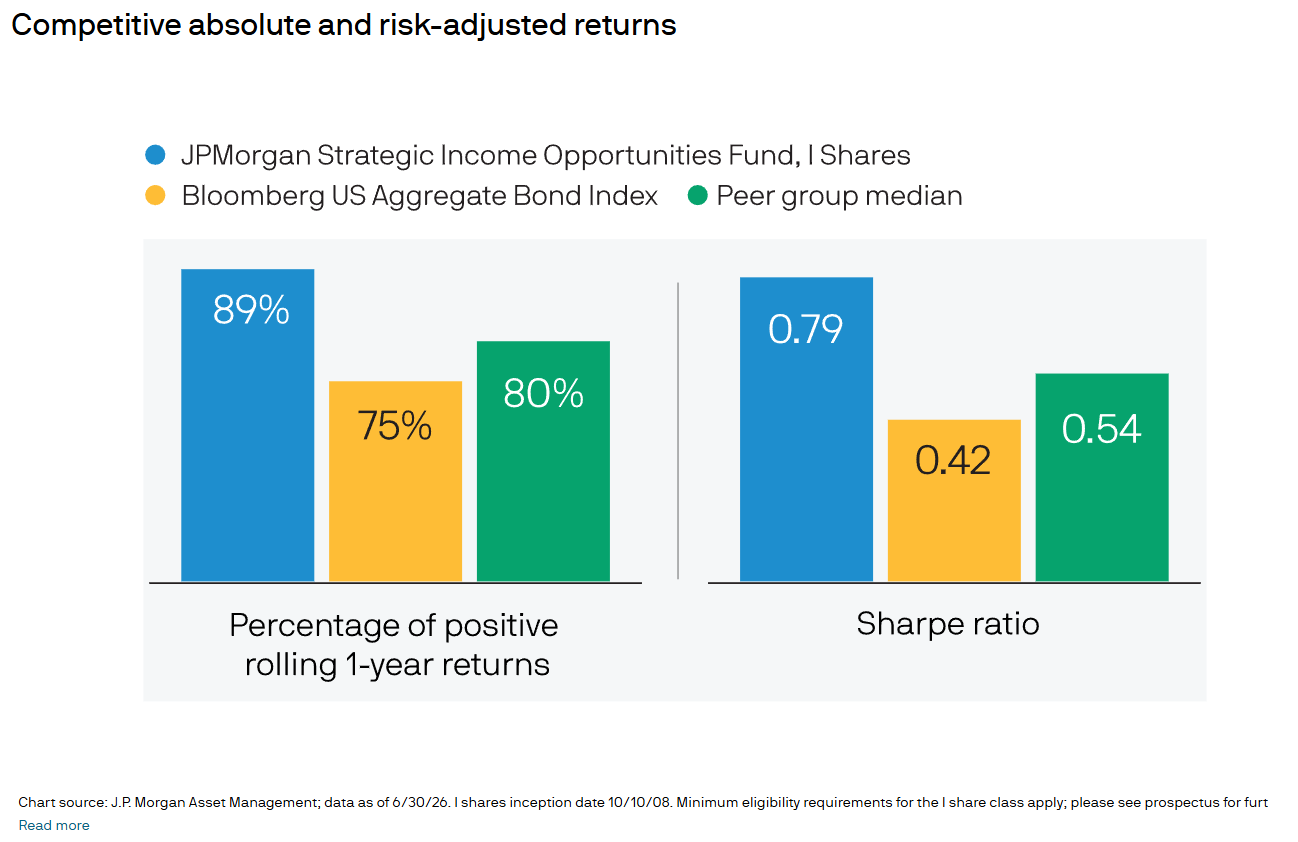
Today’s Talk Your Book is brought to you by JP Morgan: On today’s show, we discuss: JSOSX as a benchmark free fund, and the additional flexibility as a result Why avoiding duration risk has been the right call for the last five years How tight high yield spreads mask trouble showing in credit markets Why AI related debt and off balance sheet obligations raise default risk The most defensive fund positioning seen since the 2007 credit cycle Listen here: https://podcasts.thecompoundnews.com/show/animalspirits/ Charts: Follow us on Instagram,…
-
MiB: Maria Vassalou, Head of the Pictet Research Institute
This week, I speak with Maria Vassalou, Head of the Pictet Research Institute. The European-based firm manages over a trillion dollars in institutional assets. We discuss her research into global markets and how they balance geopolitical risk. We also discuss China’s growth as a technological innovator, and the risks to US debt. A transcript of our conversation is available here Monday. You can stream and download our full conversation, including any podcast extras, on Apple Podcasts, Spotify, YouTube (video), YouTube (audio), and Bloomberg.…
-
Better Investment Right Now: Stocks or Bonds?
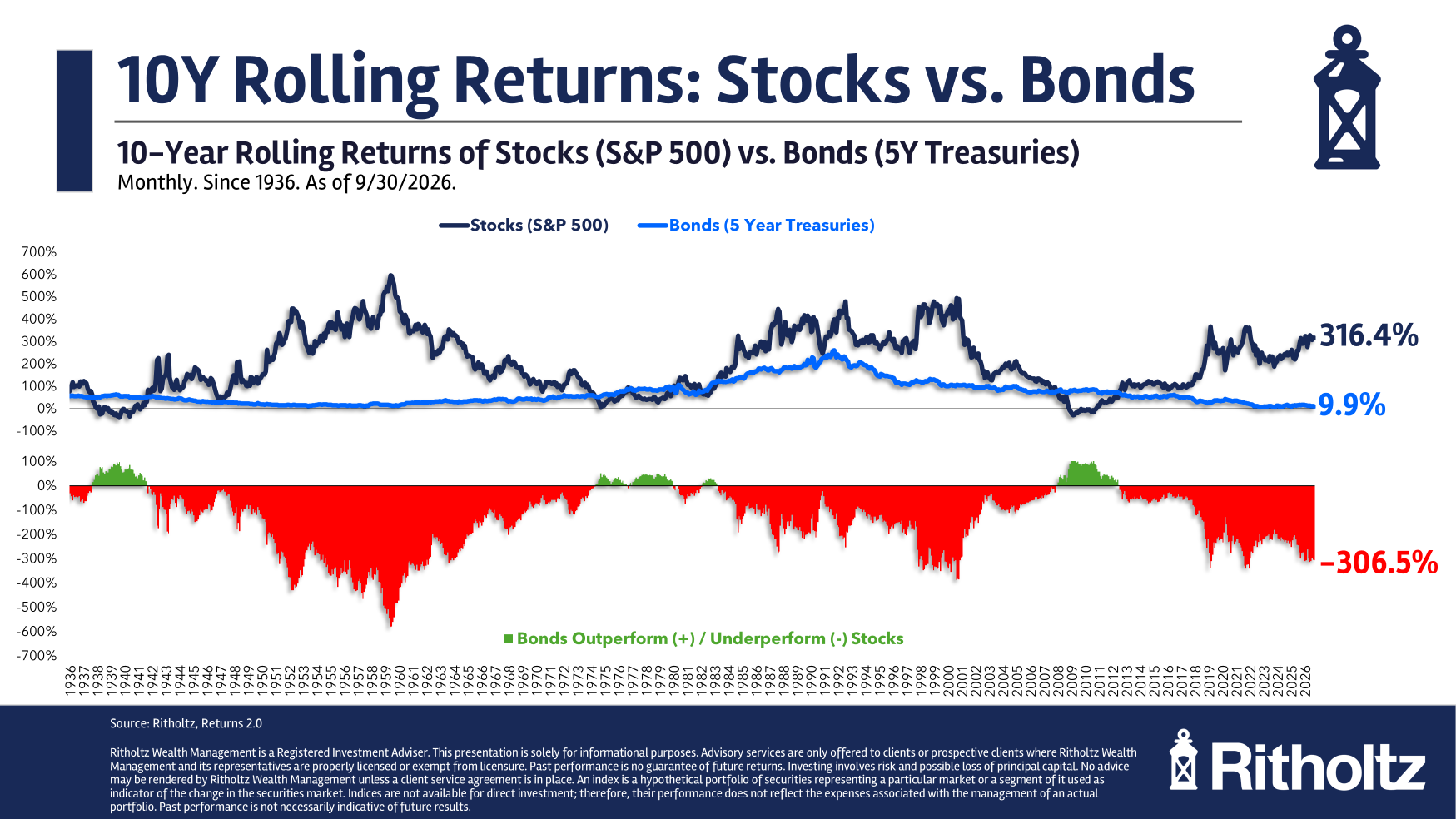
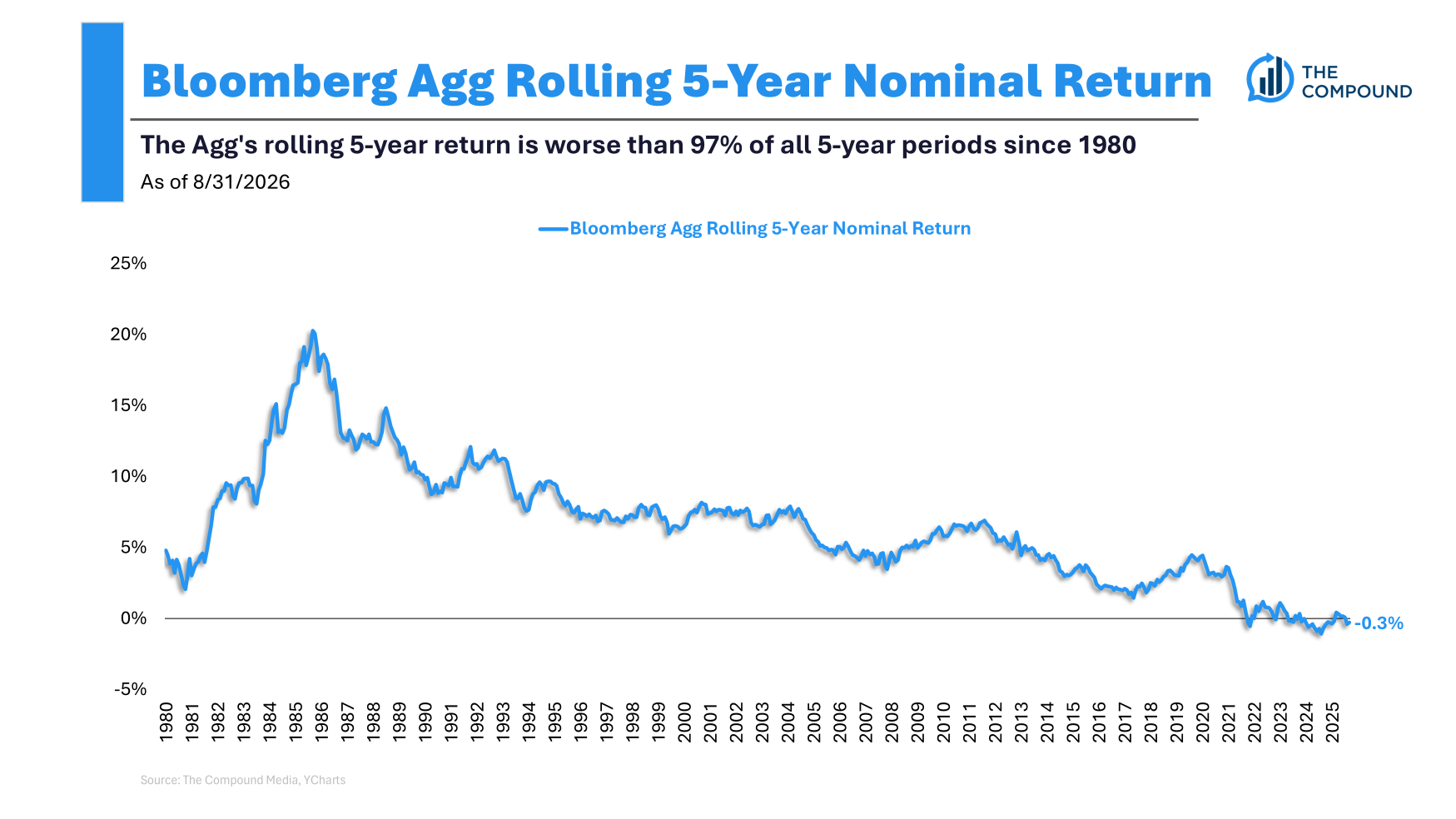
A reader asks: I know you guys are fielding many questions about bonds. Does it not always come down to time horizon? At any rate of yield, a long term investor is better off staying or adding to stocks? I get in the short term the yields are great, but if you’re invested for 10 years isn’t the opportunity cost of bonds worse? More bond buyers means fewer stock buyers, creating more opportunity for the long term investors? Or is a 5% gain (in bonds)…
-
10 Wednesday AM Reads – The Big Picture
My mid-week morning reads: • The Diesel Weapon: Why a rather unglamorous fuel is suddenly at the centre of a transatlantic power struggle, and why this matters for all of us (Material World) • 250K per year is plenty of income: If you don’t feel rich here, you probably never will: Twitter of course hates this conversation because half that website is comprised of people terrible with money, or who actively trade (gamble) crypto/equities etc, or enjoy private taxis for their burritos (Uber eats). (Hot Takes) but see…
-
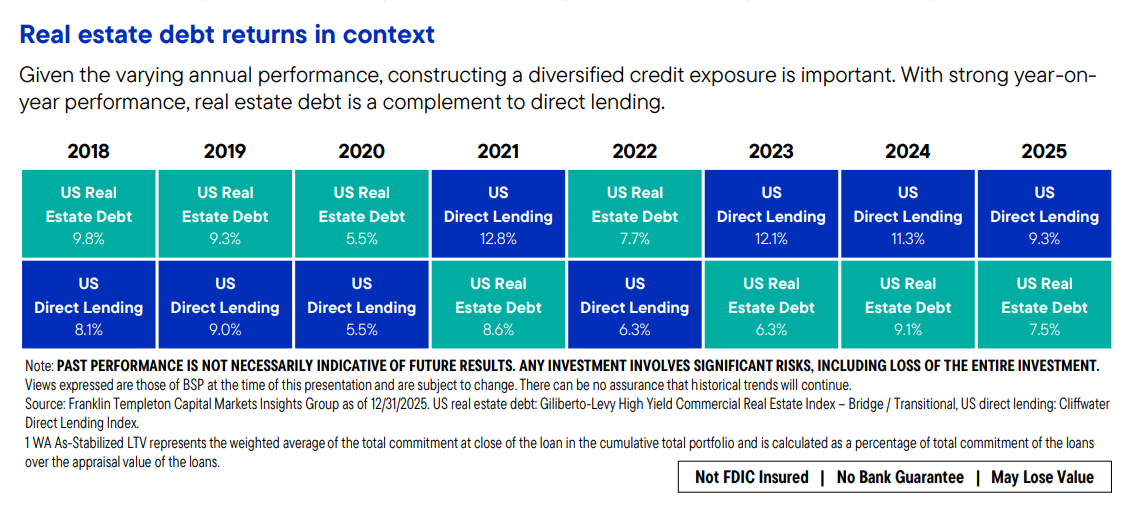
Talk Your Book: How Higher Rates Are Re-shaping Commercial Real Estate
Posted October 5, 2026 by Ben Carlson Today’s Talk Your Book is brought to you by Benefit Street Partners, a Franklin Templeton Company: On today’s show, we discuss: How real estate credit could offers more cushion than equity today How rising rates could cause a wave of refinancing and capitulation ahead The bifurcation emerging between prime assets and older, riskier properties How industrial and infrastructure are pulling capital away from other sectors Listen here: https://podcasts.thecompoundnews.com/show/animalspirits/ Charts: Follow us on Instagram, and YouTube. Check out our t-shirts,…
-
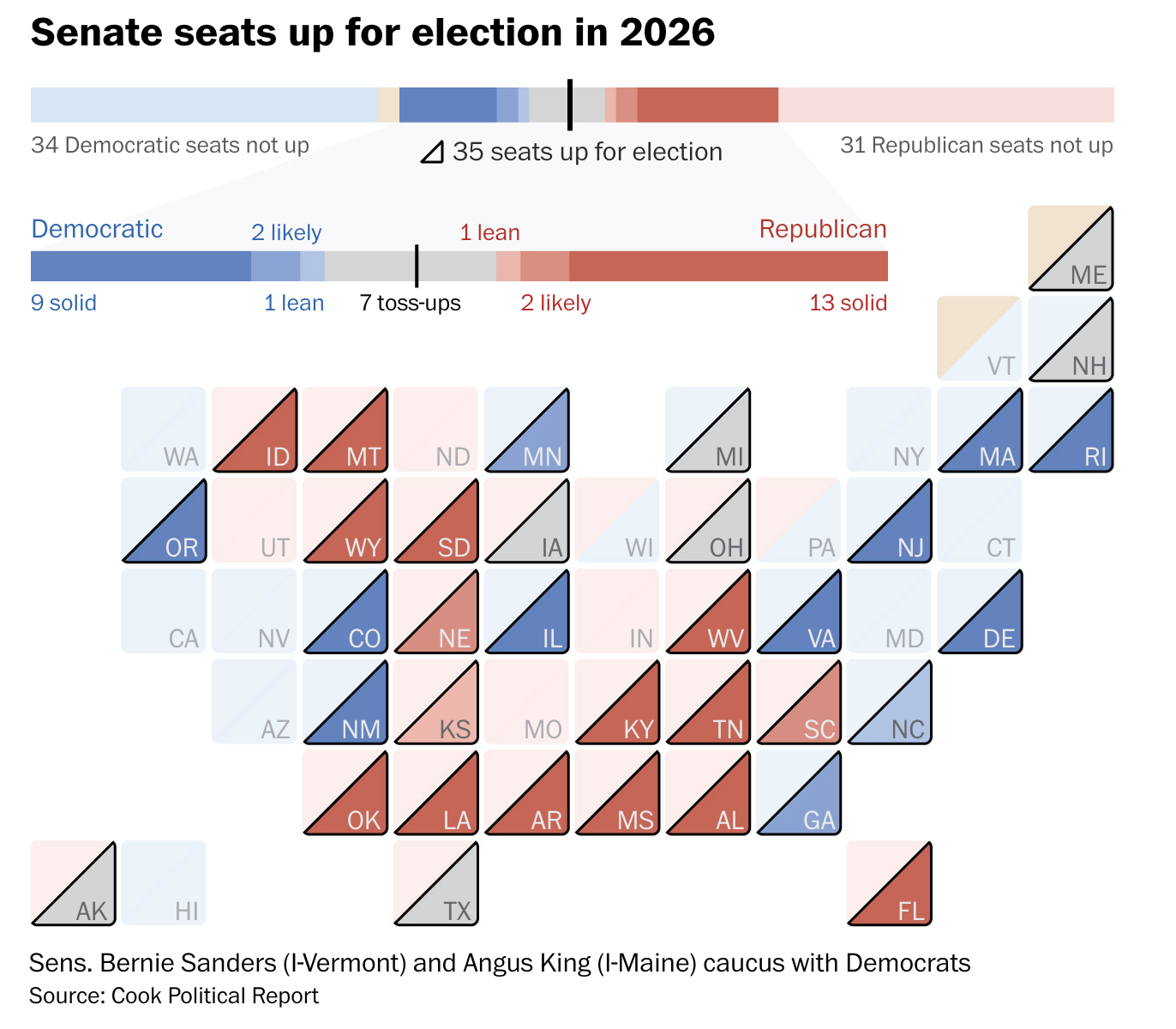
10 Sunday Reads – The Big Picture
Avert your eyes! My Sunday morning look at incompetency, corruption and policy failures: • I Deliberately Bet Like a Problem Gambler.DraftKings Made Me a VIP. Jake Pearson blew $1,800 in one night chasing losses with bigger bets, a textbook warning sign. The next day DraftKings invited him to audition for its VIP program. (ProPublica) • How Cities Are Forced to Funnel License Plate Data to a Massive Federal Surveillance Program: How the federal government built a massive database of license plate reader data through an anti-drug…
-
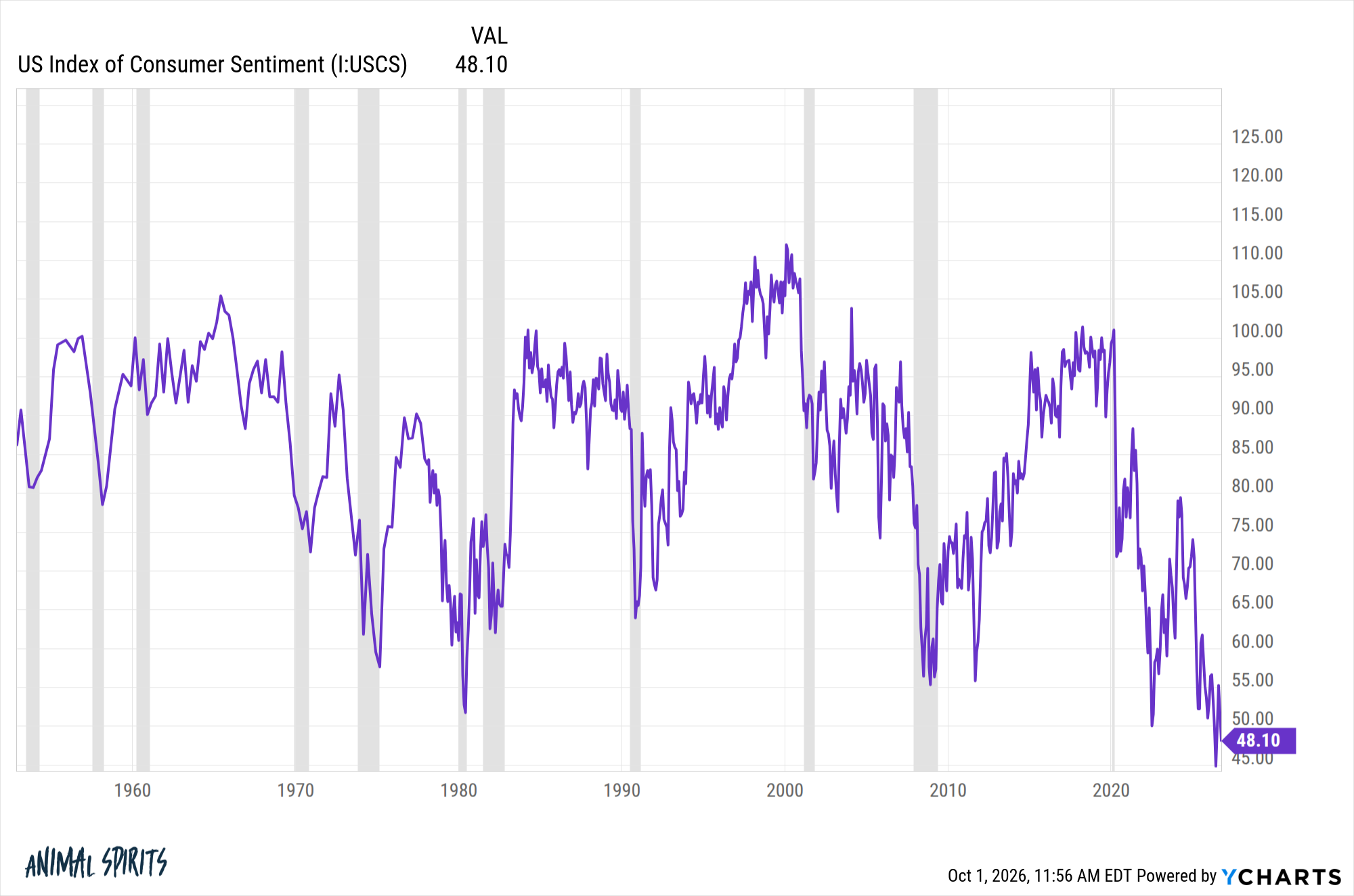
Why is Consumer Sentiment so Low?
Here’s a chart of U.S. consumer sentiment that goes back to the early-1950s: Consumer sentiment is currently lower than it was during: 9% inflation in 2022 The Covid pandemic The 2008 financial crisis and bursting of the housing bubble 15% inflation and 18% mortgage rates in the early-1980s (that ended with not one but two recessions in 3 years) Stagflation and the energy/inflation shocks of the 1970s The Vietnam war The Cold War 11 recessions in total 11 bear markets including 3 that cut the…
-
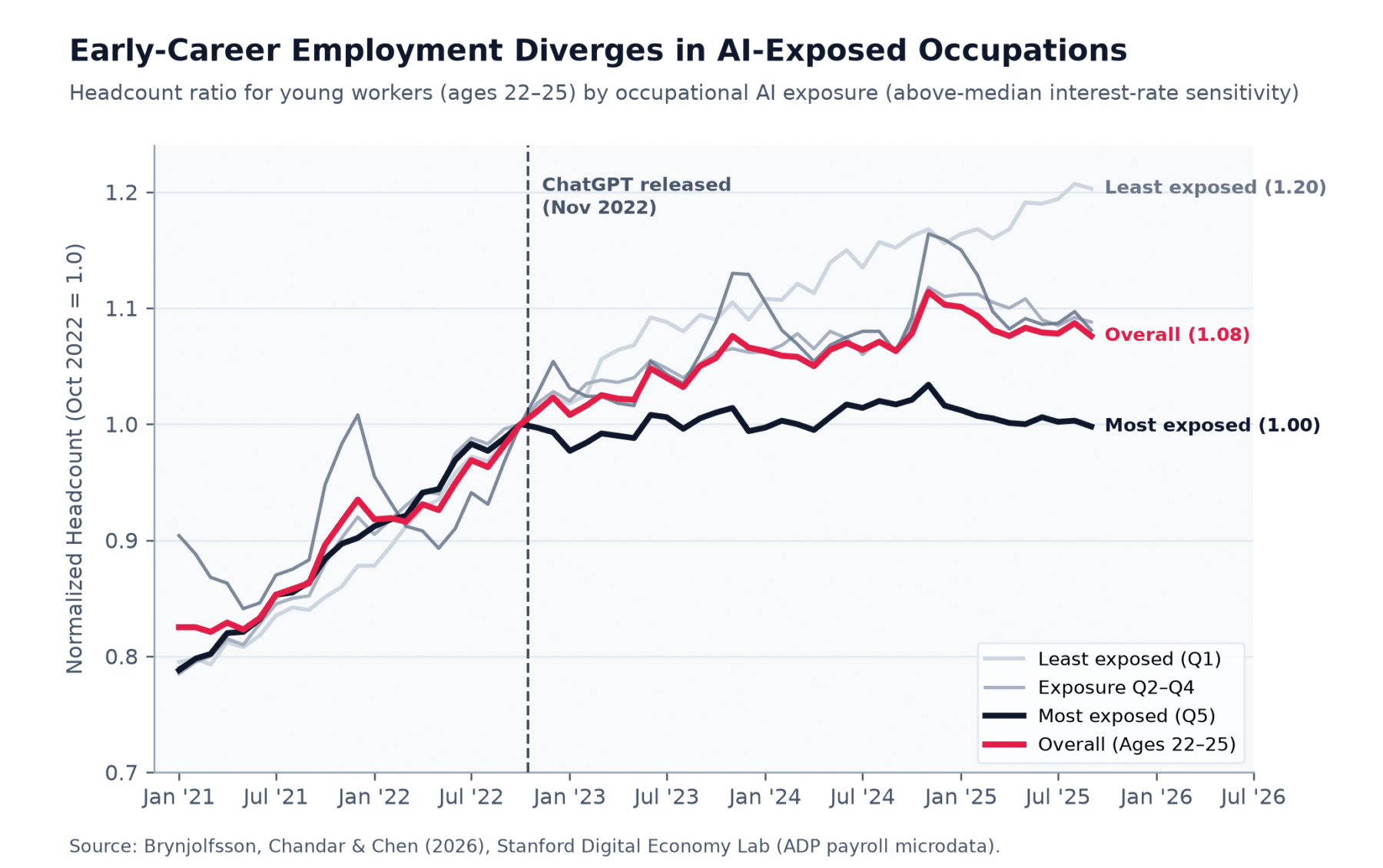
10 Thursday AM Reads – The Big Picture
Welcome to October! Kick off the month right with my morning reads: • A double-edged code – How AI is reshaping the global wealth landscape: Global financial assets expanded to a record $260 trillion in 2025, expanding +8.6% from the previous year, despite a challenging geopolitical and economic backdrop. Global wealth creation ran on autopilot, driven by markets, which accounted for 80% of additional wealth, while fresh savings fell by -5.4% to EUR4.1trn. (the record looks less impressive after inflation) (Allianz) • Get ready for…
-
Animal Spirits: Will Higher Rates Kill the Stock Market
Today’s Animal Spirits is brought to you by YCharts and Janus Henderson: On today’s show, we discuss: Listen here: Charts: Tweets/BlueSky: The S&P 500 $SPY has been holding within 1% of a new high. More than 70% of its stocks are at least 10% below their own highs. Here’s every other time it happened in the past 30 years. pic.twitter.com/oj3mEwoSyY — Jason Goepfert (@jasongoepfert) September 28, 2026 New 52-week lows are expanding on the S&P 500. The key…